How to Remove Black Mold From Basement Walls Safely
Safely clean a small patch of basement mold by containing dust, using proper protection, and fixing the moisture source. Learn when to call a professional.
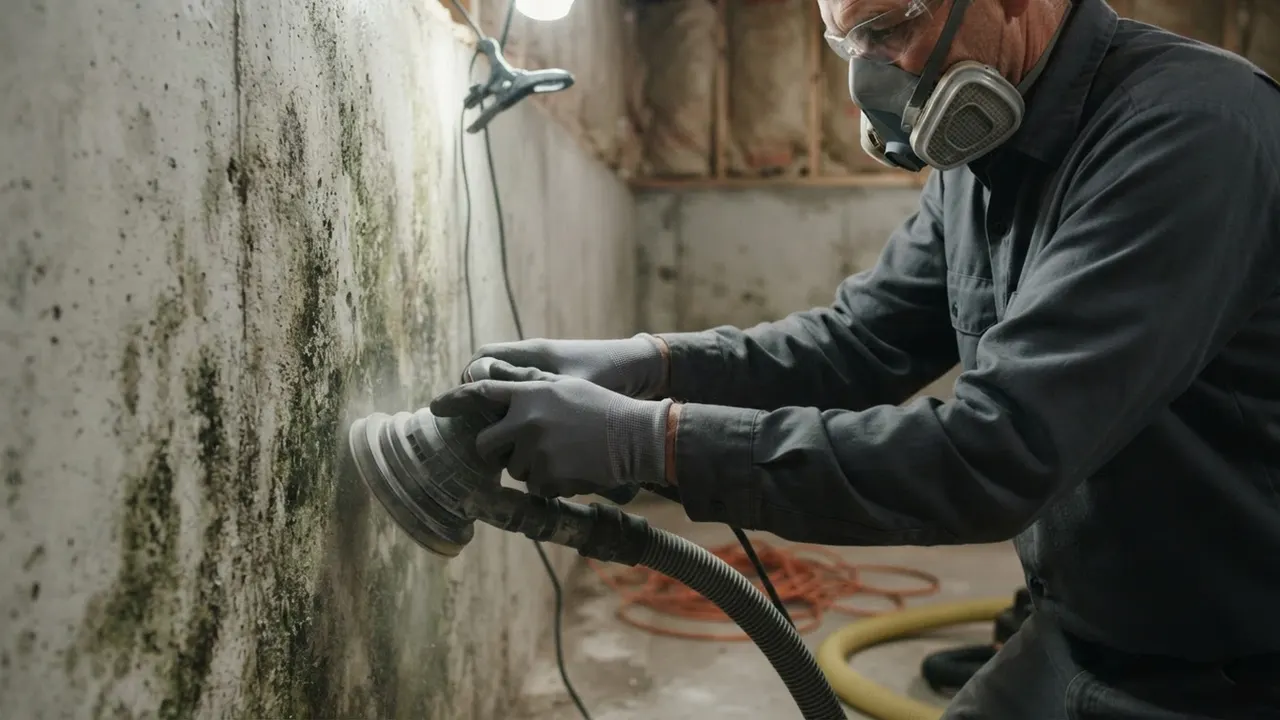
To remove black mold from basement walls safely in Hopkins, MN, isolate a small affected area, wear an N95 respirator, goggles, and gloves, clean the surface with detergent and water, then dry it completely. First stop the moisture source; without that step, mold can return even after the wall looks clean. This guide explains how to judge whether a patch is safe for careful DIY cleanup, how to avoid spreading spores, and when professional remediation is the safer choice. Color alone cannot identify a mold species, so treat visible growth as a moisture problem rather than assuming it is a particular "toxic black mold."
Safe black mold cleanup in Hopkins, Minnesota, starts with controlling moisture and limiting disturbance-not spraying a wall and hoping for the best. Our work often begins by tracing a musty basement back to condensation, seepage, a plumbing leak, or water left behind after a storm. For a small surface patch, cautious cleaning may be reasonable. For hidden, widespread, or recurring growth, get the affected materials assessed before disturbing them.
How Do You Remove Black Mold From Basement Walls Safely in Hopkins, MN?
Safe black mold removal from a small basement-wall patch in Hopkins, MN, means containing the area, protecting yourself, cleaning the surface, and correcting the water source. Black mold removal basement walls Hopkins MN is a cleanup and moisture-control process needed when visible growth appears on a limited, nonporous surface and the cause can be fixed.
Keep the work area small: U.S. Environmental Protection Agency guidance commonly uses 10 square feet as a threshold below which a homeowner may be able to handle mold cleanup, provided the area is not linked to contaminated water or a serious health concern. That is not a guarantee that DIY is suitable. Porous drywall, insulation, or wallboard with growth behind it often needs removal rather than surface wiping.
Before you begin, stop if anyone in the household has asthma, a significant mold allergy, or a weakened immune system. People with those conditions should not do the cleanup. Do not scrape, sand, or dry-brush the growth; those actions put particles into the air.
Why Basement Mold Returns in Hopkins Homes
Basement mold in Hopkins homes returns when damp materials stay wet, even after the visible marks are wiped away. Minnesota's cold season brings frozen-ground conditions and temperature differences that can leave basement walls cold; warm indoor air meeting a cool surface can create condensation. Spring snowmelt and heavy rain can also expose drainage or foundation problems.
Look for the source before cleaning. A musty odor near a floor drain, water staining below a window, or dampness at the wall-floor joint points to different causes. A dehumidifier can help, but it will not repair a leaking pipe or water entering through a foundation crack. If a leak or seepage has soaked the room, basement water damage restoration Hopkins MN addresses the water damage that can keep mold growing.
We start by checking where moisture is entering and which materials are affected. The area around Hopkins includes homes with different foundation ages and basement finishes, so a painted concrete wall calls for a different plan than drywall over framing. A moisture meter can help locate damp building materials, while a visual check alone cannot rule out water behind a finished wall.
Safe Cleanup Steps for a Small, Isolated Patch
For a small patch on a hard, washable basement wall, safe cleanup in Hopkins, Minnesota, requires protective gear, gentle cleaning, and thorough drying. Do not start if the affected area exceeds about 10 square feet, the wall is soft or crumbling, or you suspect growth behind the finish.
- Stop the water. Repair the leak or address condensation and drainage before cleaning. If water is still coming in, cleanup will not hold.
- Protect yourself and the room. Wear a NIOSH-approved N95 respirator, sealed goggles, and gloves. Keep children and pets away, close the basement door, and switch off fans or HVAC equipment that could move dust into other rooms.
- Clean the hard surface gently. Use a cloth dampened with detergent and water. Wipe rather than scrub aggressively, and avoid mixing cleaning products. Never combine bleach with ammonia or acids.
- Dry it fully. Use clean towels, then control humidity and allow the wall to dry. EPA guidance recommends keeping indoor relative humidity below 60%; many homes aim for 30%-50% when practical.
- Bag used materials. Place disposable cloths and other cleanup waste in a sealed plastic bag. Wash reusable tools and gloves, then check the wall again after it has dried.
Do not paint or caulk over visible growth. If the stain returns, the wall remains damp, or the musty smell persists, the moisture source or affected material has not been addressed. Our water damage restoration, fire damage, mold removal, water proofing Hopkins MN work connects cleanup with the underlying water problem rather than treating the mark alone.
Common Mistakes That Spread Mold or Leave Moisture Behind
Common black mold cleanup mistakes in Hopkins basements include dry scraping, relying on bleach, and leaving the water source untouched. A surface can look lighter while mold remains in porous material or moisture continues behind the wall.
Bleach is not a dependable fix for every basement surface. It can discolor finishes and add fumes, while water in the solution may not solve growth in porous drywall or wood. Use detergent and water on suitable hard surfaces, and discard porous materials that remain moldy or water-damaged rather than trying to make them look clean.
Also avoid running a box fan across an untreated mold patch or using a household vacuum without a HEPA filter. Both can spread particles. Do not assume a dark patch is a specific species based on appearance: identifying the exact type usually does not change the first priority, which is removing moisture and handling affected materials safely.
Hopkins homeowners also need to watch for water entering after a thaw or downpour. If water has pooled, drying the basement and checking concealed materials matters as much as wiping the wall; water extraction and drying Hopkins MN focuses on removing water and drying affected building materials.
What Does Black Mold Removal Cost in Hopkins, MN?
Black mold removal cost in Hopkins, MN, often ranges from roughly $500 to $1,500 for limited, accessible cleanup, while larger remediation involving demolition and drying can reach $2,000 to $6,000 or more. Typical 2026 pricing in this area depends on the affected square footage, material type, access, water source, and whether reconstruction is needed.
A small patch on bare concrete is usually simpler than growth behind finished drywall or beneath flooring. Testing is not automatically necessary to clean visible mold; the EPA notes that sampling is often unnecessary when growth is apparent and the cleanup plan is clear. A professional inspection is useful when the source is unclear, the odor has no visible explanation, or the contamination may extend into a wall cavity.
Ask what the recommended work addresses: source control, containment, removal of damaged material, cleaning, and drying. We explain the work and pricing upfront, before cleanup begins. A low price that covers only surface spraying may not resolve the moisture that caused the problem.
When to Call a Professional for Black Mold in Hopkins, MN
Call a mold professional in Hopkins, MN, when growth covers more than about 10 square feet, appears in HVAC equipment, follows sewage or contaminated water, or returns after cleaning. Professional assessment is also sensible when drywall is soft, mold is inside a wall, the source is unknown, or a household member has a heightened health risk.
Do not open a finished wall just to investigate if you suspect a large hidden area. Disturbing it can release dust into living spaces. Our team can assess visible water damage, identify likely moisture pathways, and plan containment and removal based on the affected materials. For dedicated toxic black mold removal Hopkins MN, the important work is careful containment, removal or cleaning of affected materials, and fixing the conditions that support growth.
For a broader look at the growth, moisture conditions, and appropriate next steps, mold inspection and testing Hopkins MN can help clarify what is happening before you decide how much material needs attention. Testing is most useful when it answers a specific question; it is not a substitute for stopping water and removing damaged material.
Frequently Asked Questions
How Do I Remove Black Mold From Basement Walls Safely in Hopkins, MN?
For a patch under about 10 square feet on a hard surface, wear an N95 respirator, goggles, and gloves, clean gently with detergent and water, and dry the wall completely. Fix the moisture source first. Leave porous, damaged, recurring, or larger areas to a qualified remediation professional.
Is Bleach Effective for Black Mold Removal in Hopkins, Minnesota?
Bleach is not a reliable solution for every basement wall, especially porous drywall or wood. For a small patch on a suitable hard surface, detergent and water are generally the safer starting point. Never mix bleach with ammonia or acids, and do not use it to cover up a moisture problem.
When Should I Hire a Mold Professional in Hopkins, MN?
Hire a professional when visible growth is larger than about 10 square feet, hidden behind finished walls, linked to sewage, or near HVAC equipment. You should also get help if it returns after cleaning or anyone at home has asthma, a serious mold allergy, or a weakened immune system.
Who Is the Best Black Mold Removal Company Near Me in Hopkins?
Choose a company that explains containment, material removal, moisture control, and drying-not just surface treatment. Ask how the team will locate the water source and protect unaffected rooms. Hopkins Water Damage Company handles mold and water-damage concerns locally; the right fit is a provider whose plan addresses both the growth and its cause.
Get Help With Water Damage Restoration, Fire Damage, Mold Removal, Water Proofing in Hopkins
If basement mold keeps returning, our team can help identify the moisture problem and plan safe cleanup for your Hopkins home. Call Hopkins Water Damage Company at (833) 546-4116 to discuss the next step.